
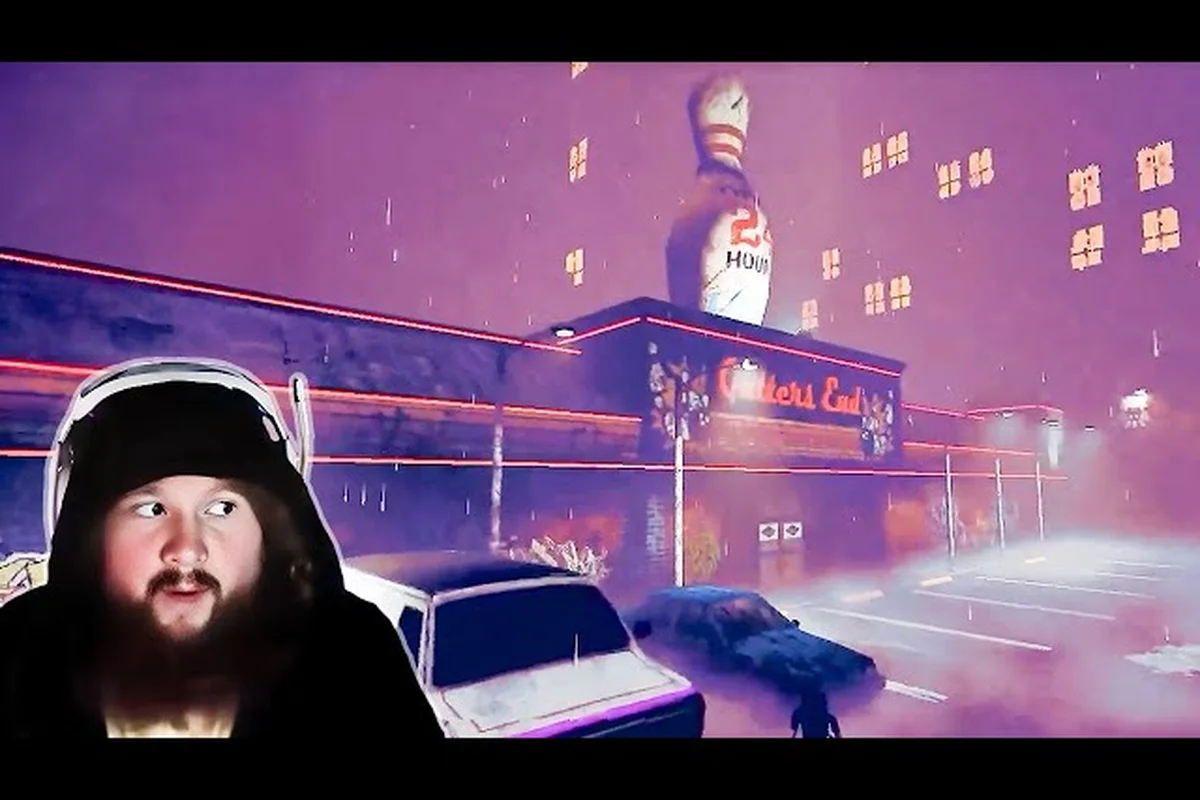
The Skin Stapler dropped on Steam and GOG on August 6, 2026, and it has already carved out a Very Positive rating with over 221 reviews. If you are weighing whether to jump into this retro-styled PSX grindhouse horror adventure, the free demo is your smartest entry point. This The Skin Stapler single player guide breaks down exactly what the demo offers, how it compares to the full release, and whether the $14.99 asking price (launch discount brings it to $11.99) is justified by the content you actually get.
The game puts you in the worn-out shoes of detective Dick Slater and his rookie partner Robbie Knox, hunting a serial killer who skins victims and staples their flesh to walls in the rotting sprawl of Carrion City. Developer Tainted Pact and publisher Assemble Entertainment have built something that leans hard into PSX-era aesthetics while delivering a genuinely tense investigation loop. Because the demo is free and takes roughly 30-40 minutes to complete, you can test the atmosphere, the puzzle logic, and the stealth mechanics before committing a single dollar.
The Skin Stapler Single Player Experience Explained
The core loop in The Skin Stapler single player campaign revolves around investigating crime scenes, collecting evidence, and surviving stalk sequences when the killer gets too close. Unlike many modern horror titles that rely on jump scares, this game builds dread through its grainy textures, fixed camera angles, and a sound design that makes every floorboard creak feel intentional. You play as two detectives across the campaign, which means the perspective shifts between crime scene analysis and survival moments depending on which character the story puts you in control of.
The investigation mechanics ask you to examine objects, take notes, and link clues together in a deduction board that tracks your progress. This is not a hand-holding system; the game expects you to pay attention to environmental details because some clues only appear after you interact with seemingly unrelated objects. According to community reports on the official Tainted Pact Discord, players who rushed through the opening crime scene missed a crucial tape that explains the killer's origin, which shows how much the game rewards thorough exploration.
What makes the single player experience stand out is how it alternates between detective work and survival horror without feeling disjointed. One moment you are cataloging blood spatter patterns, and the next you are hiding in a wardrobe while the Skin Stapler drags a blade across the walls outside. The transition works because both halves share the same resource management philosophy: you never have enough light, enough stamina, or enough safe hiding spots, which keeps the tension constant throughout.
The Skin Stapler Single Player Experience Explained
The campaign structure follows a case-based progression where each chapter introduces a new victim and a new piece of the killer's methodology. You start with the basics of evidence collection, but later chapters add timed decisions where choosing the wrong suspect or missing a key clue can lock you out of the true ending. This branching design gives the single player campaign real replay value, since the 100 percent guide on this site documents multiple endings that require specific choices across different chapters.
The victim-switching mechanic deserves special attention because it is the game's most distinctive feature. At certain story beats, you take control of the current victim, reliving their final moments before the killer catches them. These segments are short but brutal, forcing you to navigate unfamiliar environments while the killer's footsteps grow louder. They also serve a narrative purpose, showing you exactly how the Skin Stapler operates and why his victims never escape. Community testing suggests these sequences are deliberately unwinnable in some cases, which reinforces the hopelessness of the setting rather than frustrating the player with unfair difficulty.
What the Free Demo Includes
The demo released alongside the full game and gives you a substantial vertical slice rather than a shallow teaser. Based on the official Steam page, the demo covers the opening chapter, which includes the first crime scene investigation, the killer's introductory tape, and a brief victim segment that teaches you the stealth basics. Players who completed the demo report an average playtime of 30-40 minutes, though thorough investigators can stretch that closer to an hour by examining every object and reading all the environmental text.
Here is what the demo actually contains:
-
First crime scene tutorial — teaches evidence collection, clue linking, and the deduction board system
-
Opening tape sequence — introduces the Skin Stapler's origin and establishes the tone for the full campaign
-
One victim segment — a 5-10 minute stealth sequence that shows how the killer hunts
-
Full voice acting — all characters in the demo are fully voiced, matching the quality of the main game
-
Save system access — you can save your progress, though the demo is short enough to finish in one sitting
The demo does not include any achievements, which makes sense given its length. However, it does give you a complete tutorial loop that covers every core mechanic you will use in the full game. This is important because The Skin Stapler does not hold your hand after the opening chapter; the demo is your only chance to learn the investigation and stealth systems in a low-stakes environment before the full campaign throws multiple cases at you simultaneously.
What the Free Demo Includes
The demo's tutorial design is clever because it disguises learning as storytelling. You are not reading menu tips; you are investigating a real crime scene while your partner offers contextual advice that feels natural to the detective fantasy. The game teaches you to examine objects from multiple angles, to check for hidden compartments, and to use your flashlight sparingly because batteries are a finite resource even in the demo. These lessons carry directly into the full game, which is why the demo serves as an effective onboarding tool rather than just a marketing gimmick.
One thing to note: the demo's save file does not carry over to the full game. According to player reports, starting the full version begins a fresh campaign, so do not expect your demo progress to transfer. This is a minor annoyance, but the demo is short enough that replaying the opening chapter takes less than an hour. The getting started guide on this site covers the opening hours in detail if you want to optimize your early playthrough after making the purchase.
Demo vs Full Game: Content Comparison
The most common question from prospective buyers is whether the demo represents the full experience or just a curated slice. Based on the data available, the demo is roughly 5-8 percent of the total campaign content. The full game includes multiple chapters, each with its own crime scene, victim segments, and stalk sequences, plus a 16-achievement list that adds completion goals for dedicated players.
| Feature | Demo | Full Game |
|---|---|---|
| Price | Free | S$14.99 (launch S$11.99) |
| Chapters | Opening section | Full campaign |
| Achievements | None | 16 Steam achievements |
| Save transfer | No | N/A |
| Victim segments | 1 | Multiple |
| Stalk sequences | 1 tutorial | Several, escalating difficulty |
| Endings | None | Multiple, choice-dependent |
| Playtime | 30-40 minutes | 6-8 hours (first playthrough) |
The content gap between demo and full game is significant, but the demo is not misleading about what you get. It shows you the core loop, the atmosphere, and the technical performance without spoiling the major story beats. Players who enjoyed the demo's tension and investigation mechanics will find the full game delivers more of the same, while those who found the pacing too slow or the horror too subtle can walk away without spending money.
The full game's chapter structure introduces new mechanics as you progress, including timed interrogation sequences and multi-location crime scenes that require you to travel between districts of Carrion City. These additions are absent from the demo, which keeps things simple with a single location. If you are on the fence, the demo gives you an honest preview of the game's fundamental quality, but it does not show you the full mechanical depth that unlocks in later chapters.
Demo vs Full Game: Content Comparison
The price-to-content ratio is worth examining because $14.99 is a competitive price point for indie horror. At launch, the 20 percent discount brings it to $11.99, which puts it in impulse-buy territory for genre fans. The full campaign runs 6-8 hours for a standard playthrough, with additional hours for completionists chasing all 16 achievements and multiple endings. This compares favorably to other PSX-style horror games that often charge more for less content.
| Demo Content | What You Get | Length |
|---|---|---|
| First crime scene | Tutorial investigation | 20-30 min |
| Opening tape | Killer introduction | Story setup |
| Victim segment | Stealth basics | 5-10 min |
| Detective dialogue | Character introduction | 5 min |
| Environmental lore | World-building text | Optional |
The demo also functions as a technical benchmark. Because both demo and full game run on the same engine, you can test performance on your hardware before buying. The game targets 60 FPS on mid-range hardware, but the retro PSX aesthetic means even lower-end systems can run it comfortably. This is a practical advantage of trying the demo first, especially if you are unsure whether your PC can handle the game's particle effects and dynamic lighting during stalk sequences.
Is the Demo a Good Taster?
Yes, but with one caveat: the demo shows you the atmosphere and mechanics accurately, but it does not reveal the narrative scope of the full campaign. The opening chapter is deliberately slow-burn, establishing characters and setting before the horror escalates. Players who judge the game solely on the demo's first 10 minutes might underestimate the tension that builds in later chapters when the killer becomes more active and the investigation stakes rise.
The demo does an excellent job of showcasing the game's audio design, which is arguably its strongest technical element. The binaural mixing makes the killer's footsteps feel directional, and the ambient drone that plays during investigation segments creates a constant low-level unease. According to community feedback on the official Tainted Pact X account, many players cited the audio as the reason they purchased the full game after finishing the demo.
Here is what the demo gets right as a taster:
-
Honest representation — the demo's pacing and difficulty match the full game's opening hours
-
Core mechanics shown — investigation, stealth, and resource management are all present
-
Technical performance test — you can verify the game runs well on your system
-
No bait-and-switch — the full game does not introduce radically different mechanics
-
Clear value proposition — you know exactly what you are paying for
The one area where the demo falls short as a taster is story payoff. The demo ends on a cliffhanger that introduces the killer's identity but does not resolve anything. This is standard practice for horror game demos, but it means you cannot fully judge the narrative quality until you play the full campaign. If story is your primary concern, you may want to read the case walkthrough on this site to understand how the plot develops before committing.
Is the Demo a Good Taster?
For players who are new to PSX-style horror, the demo is an ideal introduction because it does not assume familiarity with the genre's conventions. The tutorial is thorough, the difficulty is forgiving, and the length is short enough to avoid frustration. For horror veterans, the demo serves as a quality check: if the game's atmosphere and mechanics resonate with you in the first 30 minutes, the full campaign will likely deliver a satisfying experience.
The demo also benefits from the Yogscast Tiny Teams festival exposure, which brought it to a wider audience before launch. Content creators like CaseOh and MoistCr1TiKaL played the demo on stream, generating significant interest in the full release. This organic marketing worked because the demo genuinely represents the game's quality, rather than hiding flaws behind a polished vertical slice. The Very Positive rating on Steam, based on 221 reviews as of August 10, 2026, suggests that players who bought the full game after trying the demo were satisfied with their purchase.
System Requirements and Performance
The Skin Stapler is designed to run on modest hardware, which makes it accessible to a wide range of players. The retro PSX aesthetic means the game does not demand cutting-edge graphics cards, but there are still minimum specifications you should check before buying. The official Steam page lists the requirements, and community testing has confirmed that the game runs well on mid-range systems from the past several years.
| Spec | Requirement | Notes |
|---|---|---|
| OS | Windows 64-bit | Official requirement |
| Genre | Action / Indie | Retro PSX horror |
| Audio | Full English voice | All characters voiced |
| Storage | ~4 GB | Demo is smaller |
| GPU | DirectX 11 compatible | Mid-range recommended |
| Resolution | 720p minimum | 1080p recommended |
Performance during stalk sequences is the most demanding aspect of the game, as the killer's AI and the dynamic lighting effects can cause frame drops on lower-end hardware. Players with GTX 1060-class GPUs report stable 60 FPS at 1080p, while integrated graphics may struggle during the most intense moments. If you are unsure about your system's capability, the demo is the perfect way to test performance before purchasing.
The game also supports controller input natively, which is recommended for the stealth segments. Keyboard and mouse controls work fine for investigation, but the precise movement required during stalk sequences feels more natural with a gamepad. Community reports suggest the game was primarily designed with controller play in mind, so console-style input is the more comfortable option for most players.
System Requirements and Performance
The load times are another consideration, especially if you are playing on an older hard drive. The game's PSX-style textures are small, but the procedural audio and dynamic lighting require some loading between areas. Players with SSDs report load times under 5 seconds, while HDD users may wait 10-15 seconds between zones. This is not a dealbreaker, but it is worth noting if you are sensitive to pacing interruptions.
The game's save system is straightforward, with manual save points at the start of each chapter and auto-saves at key story beats. You cannot save during stalk sequences, which adds tension but also means a death sends you back to the chapter start. This is a deliberate design choice that reinforces the survival horror feel, but it can be frustrating if you are playing in short sessions. The settings guide covers optimization options if you need to adjust performance settings for smoother gameplay.
Frequently Asked Questions
How long is the demo compared to the full game?
The demo takes about 30-40 minutes to complete, while the full campaign runs 6-8 hours for a standard playthrough. The demo covers only the opening chapter, which is roughly 5-8 percent of the total content. Completionists can expect additional hours chasing all 16 achievements and multiple endings.
Does my demo save carry over to the full game?
No, the demo save file does not transfer to the full version. You will need to start a fresh campaign when you purchase the game. The demo is short enough that replaying the opening chapter takes less than an hour, so this is a minor inconvenience rather than a significant drawback.
Is the demo representative of the full game's quality?
Yes, the demo accurately represents the game's atmosphere, mechanics, and technical performance. The full game introduces additional mechanics like timed interrogations and multi-location crime scenes, but the core loop remains consistent. Players who enjoy the demo's tension and investigation systems will find the full campaign delivers more of the same.
What is the price difference between demo and full game?
The demo is completely free, while the full game costs S$14.99 with a launch discount bringing it to S$11.99. Given the 6-8 hour campaign, multiple endings, and 16 achievements, the price-to-content ratio is competitive for the indie horror genre. The demo lets you test the game before committing any money.
Can I play the demo if I am new to horror games?
Yes—the demo eases you in with a calm tutorial and no cheap jump scares. Its 30-minute runtime lets you test the skin stapler’s tension without overwhelm. If you finish curious about the stalk sequence, the full guide’s pacing and tools build on that comfort zone.