
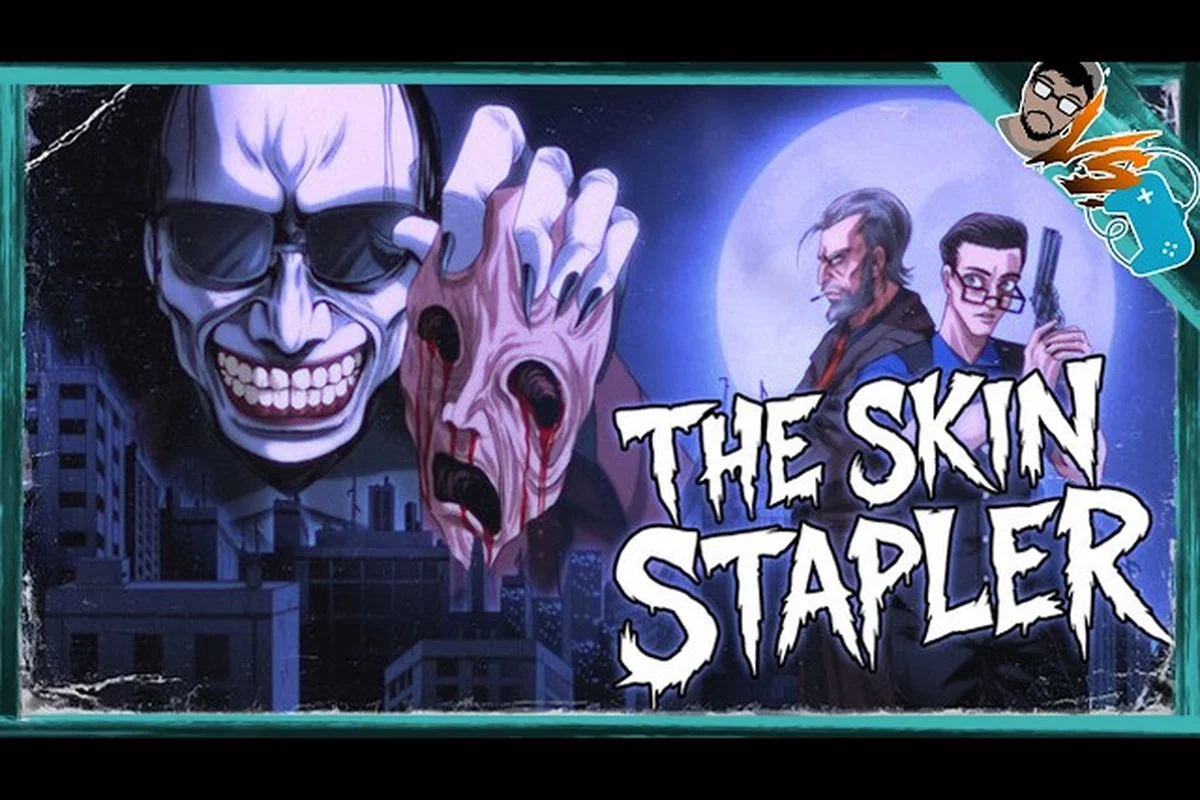
The Skin Stapler grindhouse horror guide exists because this game deliberately weaponizes nostalgia. Released August 6, 2026 by Tainted Pact and published by Assemble Entertainment, it has already earned a Very Positive rating on Steam with 221 reviews, which tells you the retro formula resonates. Set in the rotting, crime-soaked sprawl of Carrion City, you play burned-out detective Dick Slater and rookie partner Robbie Knox as they hunt a serial killer who skins victims and staples their flesh to walls. If you are curious about how PSX-era graphics and VHS grain create genuine dread rather than cheap parody, this breakdown explains everything.
The game matters because it does not just wear its influences on its sleeve—it rebuilds them from the ground up. Community reports consistently praise how the PSX low-poly look and VHS horror guide elements work together to create atmosphere that modern photorealistic horror often misses. Players describe the experience as equal parts uncomfortable and strangely charming, which is exactly what grindhouse cinema achieved in the 1970s. Get ready to understand why this indie title has become a talking point for story-driven horror fans.
Understanding the Grindhouse Horror Aesthetic in The Skin Stapler
Grindhouse cinema emerged from decaying urban theaters that screened exploitation films back-to-back, often with damaged reels and worn prints. The Skin Stapler grindhouse horror guide translates this experience into interactive form by embracing imperfection as a storytelling tool. Rather than polishing every edge, the developers at Tainted Pact deliberately introduced visual artifacts that remind you of watching a battered VHS tape on a worn-out CRT television.
The aesthetic works because it creates cognitive dissonance—your brain knows the graphics are dated, yet the atmosphere feels uncomfortably alive. According to community data from the official Discord, players frequently report feeling more immersed in Carrion City than in games with vastly superior technical graphics. This happens because the visual limitations force your imagination to fill gaps, making the horror more personal and therefore more effective.
What Grindhouse Horror Means in The Skin Stapler
Grindhouse horror traditionally combines exploitation elements—graphic violence, taboo subjects, and sensational storytelling—with a raw, unpolished presentation. The Skin Stapler embraces this fully while adding a layer of self-awareness that prevents it from becoming tasteless. The killer's counting rhyme, featured prominently in the release trailer, exemplifies this balance: it is simultaneously menacing and darkly humorous, much like classic slasher villains who taunt their victims.
The game implements grindhouse conventions through several distinct channels, each reinforcing the others: its VHS-style color grading and scanline overlay evoke the worn, degraded film stock of a 1970s drive-in print, while the static-laden audio design and abrupt, stuttering cuts mimic the splicing errors of a battered reel. Meanwhile, the story-driven horror tips—like the forced walk-and-scan segments and sudden, low-fi jump scares—mirror the pacing of exploitation trailers, ensuring that the player’s tension builds exactly as it would in a grindhouse theater. This layered approach means the PSX-style visuals don’t just decorate the experience; they actively cue the player to expect the next burst of gore or narrative twist, a synergy that the skin stapler grindhouse horror guide highlights as key to its immersive dread.
-
Exploitation poster style appears in menu screens and loading transitions, mimicking the lurid artwork of 1970s VHS slasher posters
-
Deliberate film damage includes scratches, dust, and tracking errors that appear at scripted moments, breaking the fourth wall in a way that feels intentional
-
B-movie voice acting delivers dialogue with the slightly exaggerated cadence of classic exploitation cinema, though the writing itself remains sharp and modern
-
Practical-effect gore uses PS1-era texture work to create stylized violence that reads as shocking without being gratuitously realistic
These elements combine to create what players describe as authentic grindhouse energy—the sense that you are watching something slightly forbidden, slightly dangerous, and completely absorbing. The game does not simply reference grindhouse cinema; it recreates the conditions that made those films effective in the first place.
The PSX Visual Style and VHS Aesthetic
The PSX visual style is not merely a filter applied over modern graphics—it is a fundamental design philosophy that affects every asset in the game. Character models feature the low-poly geometry and texture warping characteristic of fifth-generation consoles, while environments use the limited draw distances and fog effects that defined the era. This creates a specific kind of visual tension where your brain struggles to parse details, and that struggle becomes part of the horror experience.
The VHS aesthetic operates on a different layer, affecting how scenes transition and how information is presented. The game frequently uses scene transitions that mimic tape rewinding, complete with the characteristic high-pitched squeal and visual distortion. Crime scene photographs appear as grainy Polaroids, and the killer's taunts arrive as distorted recordings that sound like they were captured on cheap microcassette recorders.
| Aesthetic Element | Where You See It | Effect |
|---|---|---|
| PSX low-poly look | Character models, environments | Retro dread |
| VHS grain and scanlines | Scene transitions, tapes | Grindhouse feel |
| Neon signage | Carrion City streets | 1980s noir atmosphere |
The neon-drenched streets of Carrion City deserve special attention because they bridge the gap between the PSX and VHS aesthetics. The limited color palette of the PS1 era forces the developers to use neon sparingly, which makes each glowing sign feel significant. Combined with the VHS grain that softens edges and adds noise, the result is a cityscape that feels simultaneously futuristic and decayed, exactly as 1980s cinema imagined the future would look.
How Story-Driven Horror Shapes the Experience
The Skin Stapler story driven horror tips revolve around a central truth: this game trusts its narrative to carry the scares. Unlike jump-scare factories that rely on sudden noise and cheap shocks, the game builds dread through slow-burn storytelling and character development. You spend significant time with Dick Slater and Robbie Knox before the horror escalates, which means you care about what happens to them when the killer closes in.
The dual-protagonist structure adds depth because you experience the investigation from two perspectives. Slater brings world-weary cynicism and professional experience, while Knox contributes youthful idealism and technical skills. Their banter provides moments of levity that make the darker sequences more impactful, a technique borrowed from classic buddy-cop films filtered through a horror lens.
How the Story Balances Horror and Black Comedy
Balancing horror and comedy is notoriously difficult, yet The Skin Stapler manages it through careful tonal calibration. The game never undercuts its scary moments with jokes, but it uses humor strategically to release tension before building it again. This rhythm mirrors the structure of classic grindhouse films, which often followed intense violence with absurd or darkly funny scenes.
| Horror Device | How It Is Used | Tone |
|---|---|---|
| Killer taunts on tape | Distorted recordings | Menacing + darkly funny |
| Body horror | Crime scene details | Grindhouse shock |
| Black comedy | Dialogue and character beats | Relieves tension |
The killer's counting rhyme exemplifies this balance perfectly. The rhyme itself is unsettling—a childlike counting song twisted into a threat—but the delivery is so theatrical that it borders on absurd. Players report laughing nervously during these sequences, a reaction that speaks to the game's mastery of tonal control. The humor never feels forced or out of place because it emerges naturally from the characters and their situation.
Community reports from the official Discord suggest that the black comedy is one of the most divisive elements of the game. Some players find it essential to the grindhouse experience, while others wish the tone were more consistently grim. The developers have acknowledged this feedback in community discussions, noting that the balance was intentional and refined through extensive playtesting.
Why the 1980s Carrion City Setting Matters
Carrion City is not just a backdrop—it is a character in its own right. The 1980s setting allows the developers to explore themes that resonate differently than they would in a modern context. Urban decay, corporate corruption, and moral ambiguity all feel more visceral when rendered through the lens of Reagan-era pessimism, a period when American cities were struggling with crime and economic decline.
The setting also enables the VHS aesthetic to feel natural rather than gimmicky. In the 1980s, VHS tapes were the primary way most people experienced horror films, so the format carries built-in cultural associations with late-night viewing and forbidden content. The game exploits these associations by presenting its story as if it were a tape you found in a rental store, complete with worn labels and tracking issues.
Players who grew up in the 1980s report feeling intense nostalgia during certain sequences, while younger players experience the setting as exotic and unfamiliar. Both reactions serve the horror effectively because they create a sense of dislocation—the world feels slightly wrong, slightly off-kilter, even before the killer appears.
Practical Tips for Story-Driven Horror Fans
If you are approaching The Skin Stapler as someone who values narrative over action, there are specific approaches that will enhance your experience. The game rewards patient exploration and careful observation, punishing players who rush through dialogue or skip environmental details. According to the full game walkthrough by AlbearGames, the complete story spans multiple chapters with significant content hidden in optional interactions.
For players who want to maximize their story-driven horror experience, consider these approaches: prioritize narrative over jump scares by playing in a dimly lit room with headphones, which amplifies the psychological dread that the skin stapler grindhouse horror guide emphasizes—its VHS-style static and PSX-era sound design are built for immersion. Also, resist the urge to rush through dialogue; the guide’s lore is hidden in environmental details, like the rusted tools in the clinic’s basement, so pause to read every note. Finally, save your game before major choices—each decision in this grindhouse tale branches into different endings, rewarding patient players with the full, gut-wrenching story.
-
Read every document you find, including seemingly irrelevant memos and newspaper clippings, because the game weaves lore into unexpected places
-
Listen to all optional dialogue, especially between Slater and Knox during quiet moments, as these conversations reveal character depth and foreshadow events
-
Explore crime scenes thoroughly before moving on, since the game rewards careful observation with additional context and sometimes alternative solutions
-
Pay attention to the killer's rhyme, as it contains clues that become relevant in later chapters
-
Play with headphones, because the game's audio design is crucial to its horror effectiveness, with subtle sounds that are easy to miss on speakers
The game's atmosphere guide elements extend beyond visual presentation into audio design. The soundtrack alternates between synthesizer-heavy tracks reminiscent of 1980s horror scores and near-silence during tense sequences. This dynamic range keeps you constantly off-balance, never certain whether the next moment will bring noise or quiet.
A Guide for Story-Driven Horror Fans
The Skin Stapler rewards players who approach it as an interactive narrative rather than a traditional game. The story driven horror tips that experienced players share consistently emphasize patience and attention to detail. Rushing through the game to reach the ending will cause you to miss the elements that make it special.
One of the most effective approaches is to treat each chapter as an episode of a television series. Play one chapter at a time, then take a break to process what you have experienced. This mirrors the way grindhouse films were often serialized or shown in double features, and it allows the horror to linger in your mind between sessions.
The game also benefits from multiple playthroughs, though for different reasons than most games. The first playthrough focuses on the main narrative and the killer's identity, while subsequent runs reveal foreshadowing and thematic depth that you missed initially. Community reports indicate that players who replay the game discover significant new details, particularly in the dialogue and environmental storytelling.
For those seeking additional guidance, the The Skin Stapler essential tips guide covers hidden mechanics and secrets that enhance the narrative experience. Similarly, players interested in the stalk sequences and survival mechanics should consult the survival guide, which breaks down the killer's behavior patterns and how to escape his pursuit.
Technical Presentation and Grindhouse References
The technical presentation of The Skin Stapler deserves analysis because it represents a deliberate artistic choice rather than a technical limitation. The developers could have created photorealistic graphics, but they chose the PSX aesthetic because it serves the horror. This decision aligns with a broader trend in indie horror, where limitations are embraced as creative opportunities.
| Feature | Grindhouse Reference | Game Implementation |
|---|---|---|
| Exploitation poster style | VHS slasher posters | Menu and loading screens |
| Voice acting | Cheesy B-movie delivery | Full English voice cast |
| Practical-effect gore | PS1-era texture work | Stylized, not realistic |
The voice acting deserves particular praise because it walks a narrow line between sincerity and parody. The cast delivers performances that are clearly influenced by B-movie conventions, yet they never descend into outright comedy. This creates a strange effect where you are never quite sure whether to take the dialogue seriously, which mirrors the experience of watching grindhouse films that alternated between genuine horror and unintentional humor.
The practical-effect gore is implemented through clever texture work that suggests violence without showing it explicitly. This approach is more effective than graphic depiction because it engages your imagination, which is always more frightening than anything a developer can render. The game understands that suggestion is more powerful than depiction, a lesson that many modern horror games have forgotten.
Players interested in the technical implementation should watch the official gameplay trailer on the Tainted Pact Games channel, which showcases the PSX aesthetic in motion. The release trailer from Assemble Entertainment provides additional context about the game's tone and presentation.
The Community Response and Reception
The community response to The Skin Stapler has been notably positive, with the Very Positive rating on Steam reflecting broad satisfaction among players. The 221 reviews at the time of research represent a small but engaged player base, and community discussions suggest that many players are discovering the game through word-of-mouth recommendations.
Players consistently praise several aspects of the game in their reviews, with the most recurring highlights being its authentic PSX-style visual crunch and the relentless, VHS-grade grain filter that sells the grindhouse aesthetic. Many specifically commend how the stapler mechanic—simple in theory but brutally tense in execution—forces you to balance resource scarcity against the immediate threat of bleeding out, a design choice that amplifies the story-driven horror without relying on jump scares. As one Steam reviewer put it, "the sound design alone makes every staple feel like a desperate prayer," a sentiment echoed across the community’s discussion threads.
-
The atmosphere is frequently cited as the game's strongest element, with players describing the PSX and VHS aesthetics as perfectly suited to the horror genre
-
The story receives consistent praise for its pacing and character development, with many players noting that they became emotionally invested in Slater and Knox
-
The grindhouse authenticity is appreciated by players familiar with the genre, who recognize the references and understand the intentional design choices
-
The length is considered appropriate, with most players completing the game in 6-8 hours, long enough to develop the narrative without overstaying its welcome
The official Discord community has become a hub for discussion, with approximately 70 members online at research time. Players share puzzle solutions, killer theories, and update discussions, creating a collaborative environment that enhances the experience for new players. The developers are active in the community, responding to feedback and providing context about design decisions.
For players who want to understand the game's achievements and collectibles, the achievements guide provides comprehensive coverage of all 16 achievements. New players might also benefit from the beginner guide, which covers the basics of gameplay mechanics and progression.
Frequently Asked Questions
What makes The Skin Stapler grindhouse horror guide different from other horror game guides?
Unlike typical guides focused on combat or collectibles, The Skin Stapler grindhouse horror guide decodes the game’s VHS grain, PSX jitter, and black-comic tonal shifts. It frames the 1980s setting and gore as deliberate storytelling tools, turning mechanical survival into an appreciation of the game’s cinematic, artistic craft.
How long does it take to complete The Skin Stapler?
Most players report completing the main story in approximately 6-8 hours, according to community data from the official Discord. This length allows the narrative to develop properly without overstaying its welcome. Players who explore thoroughly and engage with optional content may spend additional time, while those focused solely on the main path can finish more quickly.
Is The Skin Stapler suitable for players who do not enjoy traditional horror games?
Yes, because the game emphasizes atmosphere and storytelling over jump scares and gore. The PSX and VHS aesthetics create a nostalgic, almost cozy feeling that contrasts with the disturbing subject matter. Players who typically avoid horror games report enjoying The Skin Stapler because the horror emerges from narrative tension rather than cheap scares, making it accessible to a broader audience.
Does the game require knowledge of grindhouse cinema to appreciate?
No, the game is designed to be accessible to players unfamiliar with grindhouse conventions. The aesthetic choices work on their own merits, and the story stands alone without requiring genre knowledge. However, players familiar with grindhouse cinema will notice additional layers of reference and meaning, enhancing their appreciation of the game's craft and intentionality.
What are the best settings for experiencing the PSX and VHS aesthetics?
Disable anti-aliasing and motion blur for the raw PSX look, then max out VHS grain and scanlines. Play in a dark room with headphones—the tape hiss and CRT hum sell the grindhouse dread. Default settings work, but bumping distortion to 70% sharpens that Skin Stapler vibe.